
Jihad With a Smile
Zohran Mamdani hasn't referenced jihad...but he's waging it.

On Monday, July 1, United States Senator Kirsten Gillibrand issued an apology to New York City mayoral candidate Zohran Mamdani after claiming in a radio interview that Mamdani had made “references to global jihad.” Gillibrand was right to apologize. Mamdani has never said anything publicly along those lines. However, much of what Mamdani has said and done throughout his life seems jihad adjacent – as though he’s motivated not by improving the lives of New Yorkers or Americans – but by something else entirely.
For many years, Zohran Mamdani has been obsessed with Jews and the State of Israel.
Of course, he wasn’t born to think this way – nobody is. He learned how to think about the world around him and his own identity through his father – Columbia University professor Mahmood Mamdani. His mother, Nira, confirmed this saying that “...the world we live in, and what we write and film and think about, is the world that Zohran has very much absorbed.”
It’s no wonder, then, where Zohran gets his fervent yet rather refined antisemitic beliefs. According to a recent piece in the New York Times, Mahmood Mamdani has “...described Zionists as oppressors in some of his writings,” he’s also “led teach-ins at Columbia’s encampments protesting the war in Gaza,” and in 2023, he “criticized the university’s response to the protests.” When it comes to broader anti-Western views, he’s claimed that Adolf Hitler’s policies were inspired by America’s treatment of Native Americans (which, they were not), and on October 7th, he’s referred to the massacre carried out by Hamas in Israel as a “military action.”
Mahmood Mamdani has even stated that “...the longtime security of a Jewish homeland in historic Palestine requires the dismantling of the Jewish state.” “Palestine can be a homeland for Jews,” he wrote, “...but not for Jews only.” According to Mr. Mamdani, “Jews can have a homeland in historic Palestine, but not a state.” For Mamdani, the best way Jews can thrive, limit their own slaughter, and establish a true sense of safety and security is through abandoning the very thing that has prevented their complete extermination – Zionism and the re-establishment of a Jewish state. Repeatedly stating that Zionism is a colonial-nationalist project, something he speaks about in his 2020 book Neither Settler nor Native, Mamdani does what many others like him have done – he redefines Zionism as the epitome of global injustice, inequality, and inequity.
But it is on the matter of jihad where Mahmood Mamdani’s thinking has been most concerning. Unfortunately, few seem to have picked up on it and how it aligns with his son’s approach to politicking, communicating, and connecting with constituents – particularly those who either feel slighted or unjustly treated.
In Islam the word jihad literally means “struggle” or “exertion” in the way of God. The Quran uses it in both spiritual and military contexts. Classical scholars note that jihad broadly includes personal moral effort as well as, when required, armed offensives on behalf of the community. Professor of Islamic studies at Georgetown University, John L. Esposito, writes, “in its most general meaning, jihad refers to the obligation…to lead a virtuous life and to extend the Islamic community.” Esposito notes that “Jihad also includes the right, indeed the obligation, to defend Islam and the community from aggression.” From this perspective, jihad involves fighting injustice and oppression, as well as spreading and defending Islam through preaching and, if necessary, armed struggle.
In his 2004 book, Good Muslim, Bad Muslim: America, the Cold War, and the Roots of Terrorism, Mahmood Mamdani echoes this, while also stating that jihad is a “doctrine shared by all Muslims,” and that according to the Quran, “a Muslim’s first duty is to create a just and egalitarian society in which poor people are treated with respect...this demands a jihad (literally, effort or struggle) on all fronts: spiritual and social, personal and political.” He goes on to state that “Islam sanctions rebellion against an unjust ruler, whether Muslim or not” which when it comes to jihad “...can involve a mobilization for that social and political struggle.”
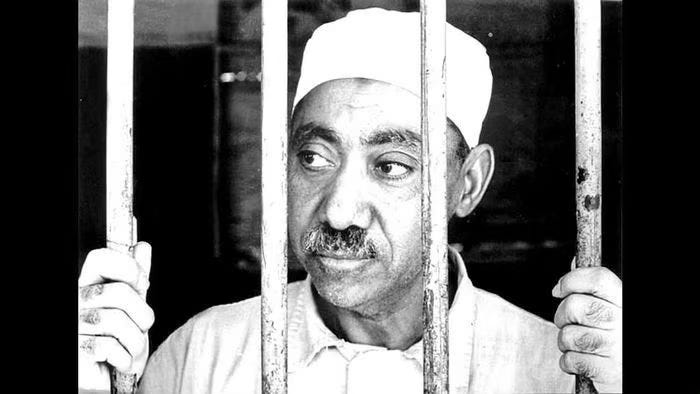
Writing rather dotingly about figures like Sayyid Qutb – an Islamic fundamentalist who advocated for violently overthrowing non-Islamic governments in favour of puritanical theocracies – Mamdani explains that Qutb “...argued that jihad involves both persuasion and coercion, the former appropriate among friends, but the latter suited to enemies.”
Also alarming is how Mamdani whitewashes the realities of abhorrent jihadist campaigns throughout history. Writing about what he describes as “four just wars” where jihad has been waged, Mamdani states they include “Saladin’s jihad against the Crusaders in the twelfth century, the Sufi jihad against enslaving aristocracies in West Africa in the seventeenth century, the Wahhabi jihad against Ottoman colonizers in the Arabian Peninsula in the eighteenth century, and the Mahdi’s anticolonial struggle against the combination of Turko-Egyptian and British power in the late nineteenth century Sudan.”
Mamdani ignores the fact that these campaigns were largely motivated by a desire to eliminate non-believers, to punish those who deviated from true Islam, and by a vision of extreme and unwavering religious unification. Further, it’s clearly irrelevant that these campaigns led to unimaginable death, destruction, carnage, religious subjugation, and enslavement. For him – these weren’t wars of conquest – they were righteous battles against classist hierarchies and colonialism.
Those reading the same 2004 book clearly noticed his thoughts regarding suicide bombing which have now gone viral – "We need to recognize the suicide bomber, first and foremost, as a category of soldier, " writes Mamdani. "Suicide bombing needs to be understood as a feature of modern political violence rather than stigmatized as a mark of barbarism." Again – to Mamdani we’ve got it all wrong when it comes to people who make homemade explosives and kill as many civilians as possible. They aren’t savages – they’re just waging war like we are. Likewise, in an interview with the Asia Society, Mamdani struck a similar tone, saying “If you are defending yourself in Afghanistan by attacking New York, how is it different from defending yourself in New York by attacking Afghanistan?”
But isn’t just what the elder Mamdani has said that’s disturbing – it’s also how he’s said it. Leading by example, Mahmood Mamdani has taught his son that hatred of Jews and Israel can’t be presented in some brash, unsophisticated, ugly, or unpalatable way. It’s got to be smooth, smart, and punchy. It’s got to have the buzzwords, it has to appeal to moderate thinkers and people who consider themselves intellectuals, and it has to be framed as righteous, as part of an effort to dismantle struggle, inequality, and injustice. Barroom antisemitism won’t do – but barista style Jew-hatred can take you to the top if you use it strategically.
This, of course, is precisely what his son has done.
From co-founding the Bowdoin College chapter of Students for Justice in Palestine, to rapping about his “love” for the “Holy Land Five” – leaders of a former Islamic charity that funnelled over $12 million to Hamas – to claiming Israel was committing a genocide less than a week after October 7 – Zohran Mamdani has made the vilification of Jews and Israel a pillar of his political platform – and his identity – in a way that’s clearly appealed to a large number of New Yorkers.
Yet despite all of this, people seem more concerned about the many embarrassingly amateurish things he’s said to legitimize his socialist persona, such as his campaign pledge to create city-owned grocery stores, stating that he’d raise minimum wage to $30 dollars an hour, and calling for the abolition of private property. “If there was any system that could guarantee each person housing — whether you call it the abolition of private property or you call it a statewide housing guarantee — it is preferable to what is going on right now,” he said.
However, when it comes to Jews, Israel, the Middle East, and Islam – topics he’s been consistently vocal about most of his life – he’s been conspicuously mum since entering the mayoral conversation. As one article in the Wall Street Journalnotes, “This has been the first time in Zohran Mamdani’s adult life that he hasn’t wanted to talk about Israel. To obsess over its sins, real and imagined; to destroy it; to expel it from the club of nations. This was also the first time he has run for mayor of New York.”
The reason for this, is that while Mamdani is heavily motivated by outrageous and dangerous ideas regarding Jews and Israel, he knows that in order to preserve any political future in New York, he has to focus his attention – at least verbally and publicly – elsewhere. The thing is, anyone who has studied radical Islamic thinkers, such as the aforementioned Sayyid Qutb, knows that there is a longstanding symbiosis between socialism and Islamism – a space that Mamdani knows well and is using to his advantage.
For instance, contemporary members of the Muslim Brotherhood acknowledge that Qutb was influenced by Leninist revolutionary thinking. In his article "Four Decades After Sayyid Qutb's Execution,” Ibrahim al-Houdaiby writes that that Qutb was “...heavily influenced by Lenin's ‘What is to be done,’ with the clear Islamization of its basic notions. He argued that society was suffering from "jahiliyya" (a state of ignorance which preceded the revelation of Islam) and that consequently, there is no room for middle ground between Islamists and their societies.”
Similarly, American author Rod Dreher writes “What is to be done? Lenin famously asked about Czarist Russia. Qutb's answer to the same question about the West was, in part, [his book] ‘Milestones,’ a Leninist-style tract advocating worldwide Islamic revolution. Mamdani’s father even wrote that Marxism-Leninism was at one point “...the most important alternative to political Islam in intellectual debates on how best to confront a repressive secular state...”
Despite the inherent contradictions and incompatibilities between Islam and socialism, there remains enough overlap between the two when it comes to revolution, vanguardism, and the elimination of existing systems and structures that they can be mutually beneficial for some time. In essence, this is at the heart of the “Red-Green Alliance,” Zohran Mamdani’s identity, and his approach to politics.
All told, while Mamdani likely doesn’t condone acts of violence, it certainly appears as though he’s waging a form of jihad, in such a way that it appeals to both leftists and/or socialists, as well as Islamists. Indeed, in some ways, he’s become the poster boy for the dangerous and destabilizing relationship that’s emerging between these seemingly disparate ideological camps.
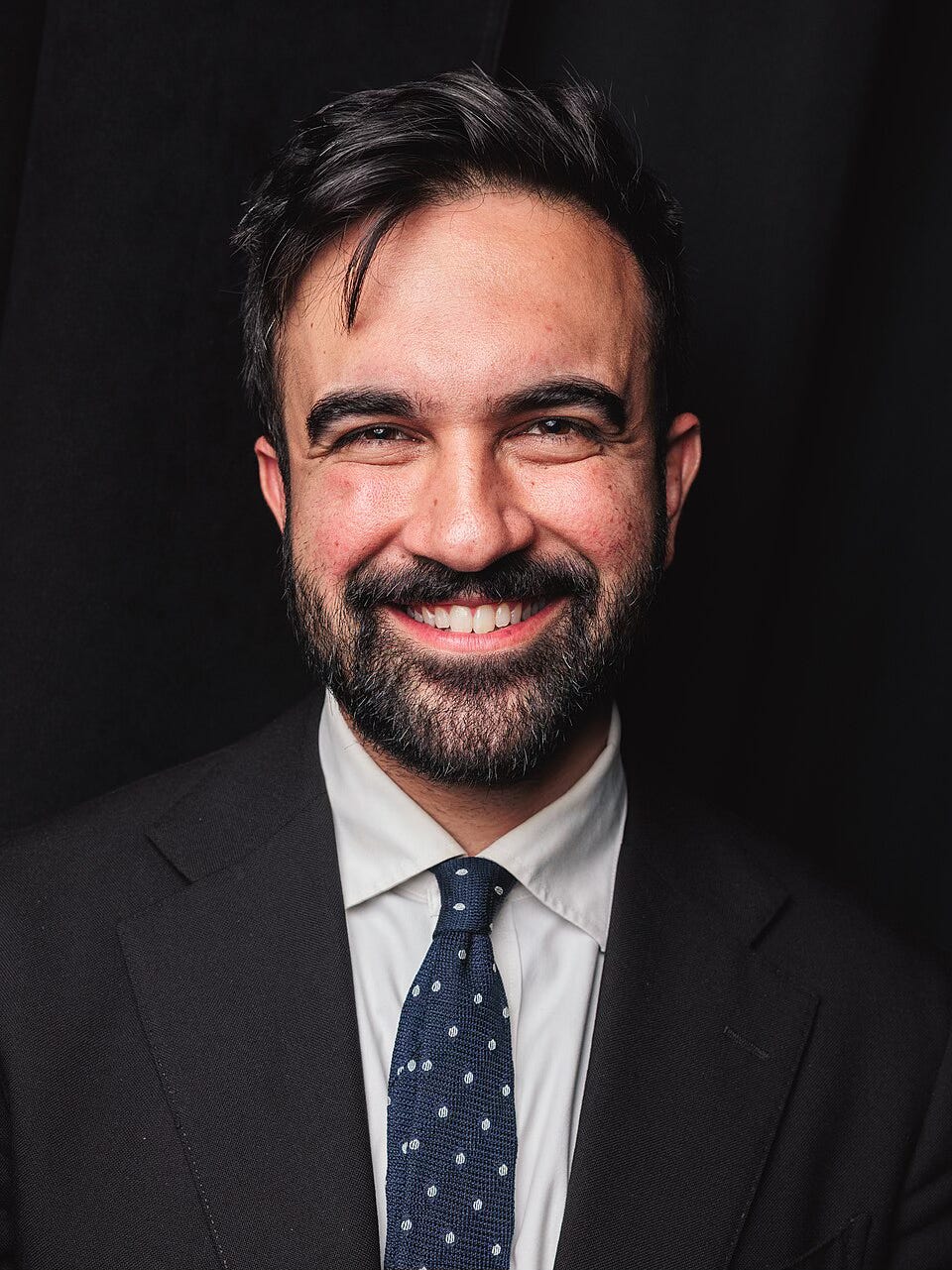
And if he can pull off a win in November – he’ll take his place as the anointed Son of the Red-Green Alliance.
So, while Senator Gillibrand’s apology was warranted – there absolutely is cause for concern about Mamdani when it comes to “global jihad.” No, he hasn’t referenced it – but he’s living it – and he’s waging it day after day, appearance after appearance, speech after speech, with a smile.
New Yorkers – you’ve been warned. In November – the Big Apple could fall.